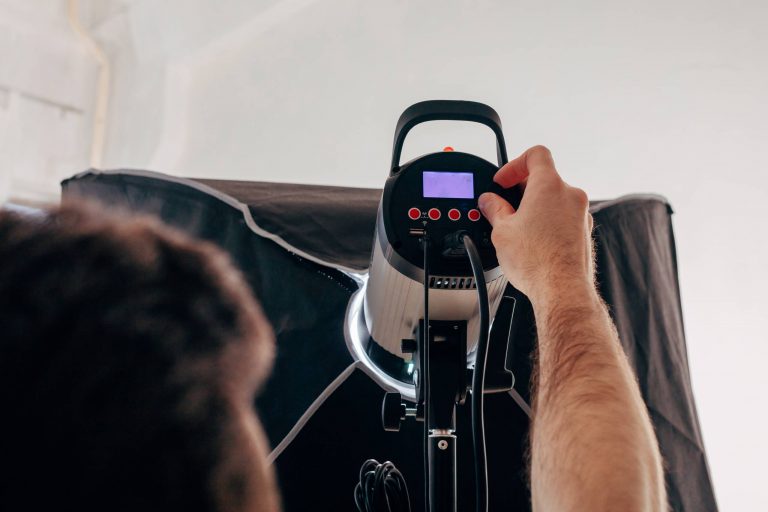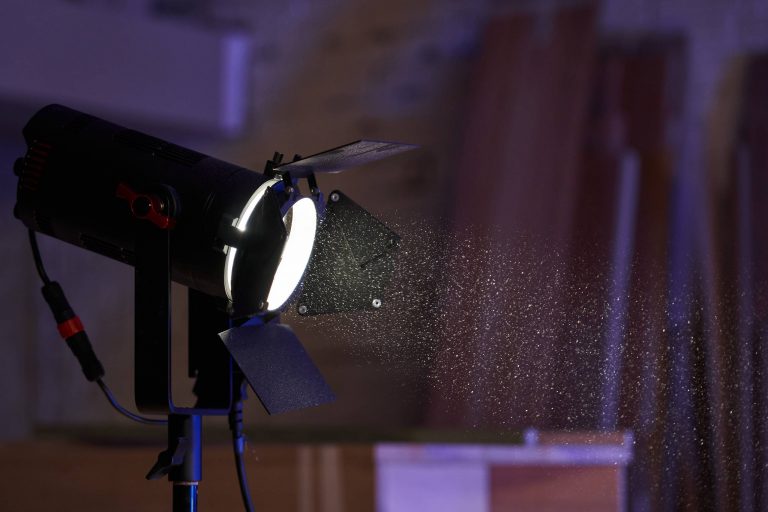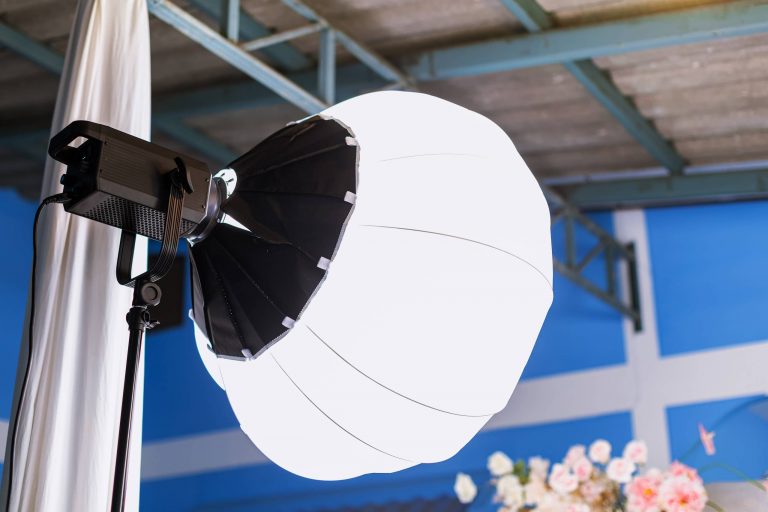

When you can only use one primary light source, you’re obligated to consider it’s position, the light quality, and how you want to modify it, which often leads to very deliberate, atmospheric, and cinematic looking shots. It’s a technique borrowed from the masters of the renaissance era and film noir cinematographers who didn’t seek to remove shadows but to embrace them as a tool to tell a story.
Knowing the inherent nature of a light source and choosing the right fixture is the starting point for single source lighting. A bare bulb produces a hard light with great contrast, dark shadows and a sharp light fall off. It would be perfect for a dramatic portrait or an intense dramatic scene. If we were to diffuse the light with a large scrim, or bounce it off a white bounce board or even a white sheet, it would make the same light much more pleasing and would be great for an interview or a dramatic scene in which a character is reflecting on something. Where we position this single source is also important.
A few modifiers can make a single light source unbelievably diverse. A reflector can harvest and throw back any stray light as a fill to keep it looking like a single light source, but give you enough illumination on elements to extract them from the shadows. A flag or negative fill can block stray light from reaching the subject, making blacks blacker and further distinguishing the subject from the background. A gel can change the color temperature or color of the light to match the mood of the scene without having to bring in another light. With these simple tools, you can make a single light source function in anything from a documentary interview to a pop music video while still retaining the uniform look you would have a hard time matching with multiple light sources.
Another benefit of this system is how it’s ideally suited to practical shooting conditions. When you’re on location with limited power, time, or crew, a single light is usually better than a lot of lights. It allows you to work quicker, and to take more notice of your surroundings; a window, a practical, even a car headlight, can all become an extension of your single source. It makes you more creative, because you’re always looking for light, not just the light in your cases.
In the end, single source lighting isn’t about less, it’s about more. More of what matters in the story. More use of shadow instead of fill. More with less. The longer you do it, the more you will find that when you are shooting with a single light, you are not hampered by it’s restrictions. Instead, you will discover that it frees you up to develop your own unique style. Many of the greatest shots in cinema and video have been accomplished with a single light source.